In addition, on the Tate website information includes various galleries that opened before and after the 70s to house what they deemed as contemporary art. Such as ‘the institute of contemporary art” founded in 1947 and includes contemporary art from that period. Moreover, the ‘New Museum of Contemporary Art’ in New York that only has art from 1977 onwards and then there is the ‘TATE’ museum of contemporary art from the 1980s. A quote from the ‘Tate’ “the term contemporary art is loosely used to refer to art of the present day and of the relatively recent past, of an innovatory of avant-garde nature. (tate.org.uk)
I have read many statements of what defines ‘Contemporary art’ and to summarise what I found, is that, it encompasses most genres of art from the 70s and 80s to the present day. Importantly created without restriction, enveloping ideas from various such sources as politics, cultural change, new technology, new mediums and pushing new boundaries.
Personally, I would say using a descriptive word such as ‘contemporary’ to describe a period of bodied work from say the 1970s or even prior and onwards, is too generalised, especially when that era includes various art movements that have their own adjectives and analytical agenda, such as Post modernism, Conceptualism, Feminism etc. So to me Contemporary is an umbrella title encompassing all modern and present.
However what does it mean to the studio artist like myself
As an artist and former designer, art history and its genres and isms have been a subject that over the years I have studied often-through curiosity and need, including such movements as classical, impressionism, fauvism and many more. As an artist, one cannot help but be influenced both inwardly and outwardly by their past learnings and ultimately using the knowledge to create a foundation into something deemed as eventually contemporary. Whilst at art school in the early 80s we often used past artists to influence us to create a body of work, not copied but a foundation for our own development.
Today technology has moved on since the introduction of computer technology in the early 80s and having studied textiles at that time is was exciting to be able to put a design on to a computer and play on a screen without having to be repetitious and paint the design out by hand. We have come such a long way since those early days and now art is formed without the need of a studio painter, which is both daunting and I suppose ultimately intriguing. However, is this progress and if so, is it in the right direction for art’s sake? After all several years ago, David Hockney, put together a body of work that was created on an iPad. Nearly everyone uses an iPad, tablet, or phone camera to capture that moment in time rather than paint from reality and it can have remarkable results in an ever-fast moving world in which we find ourselves.
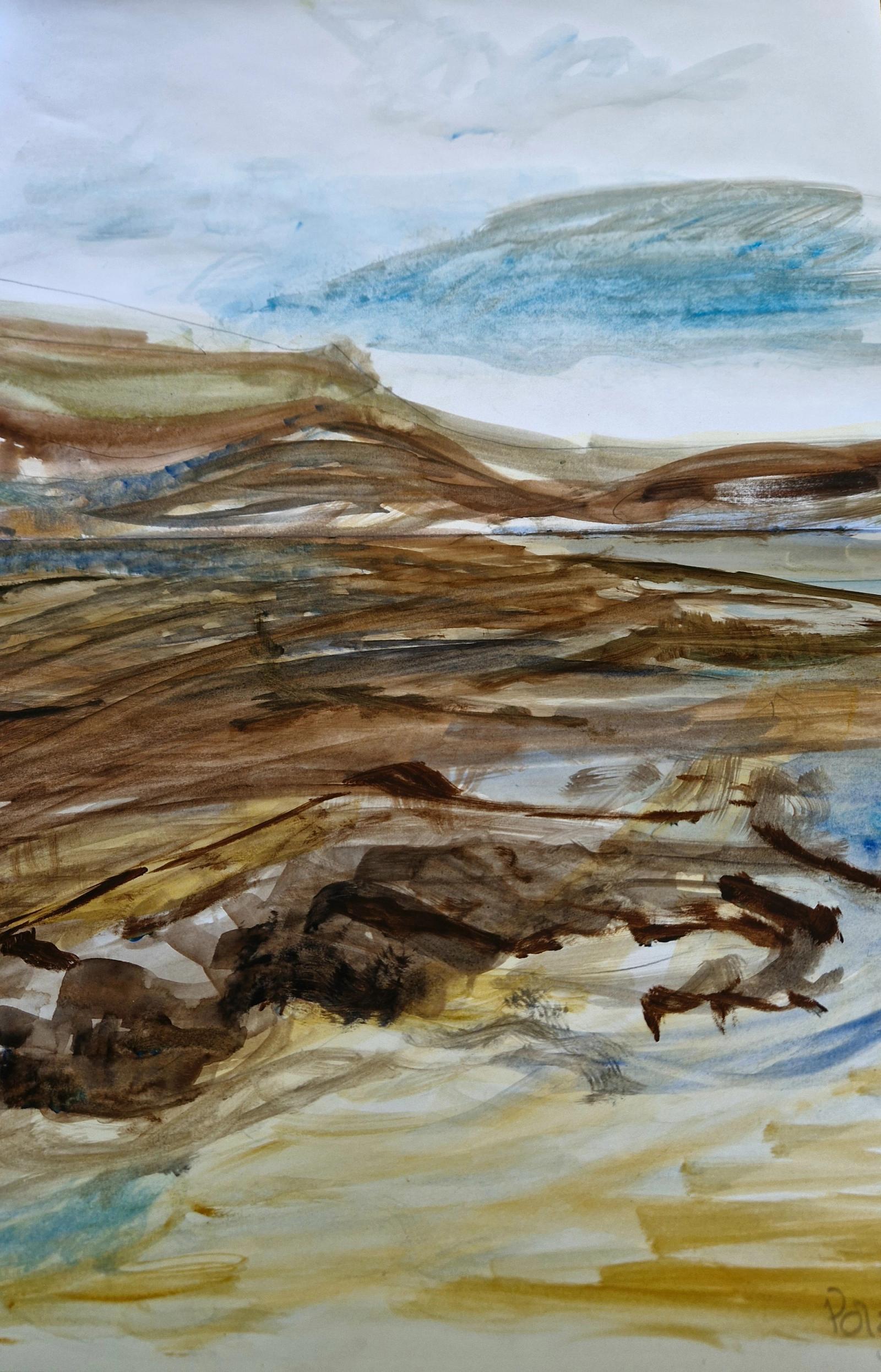
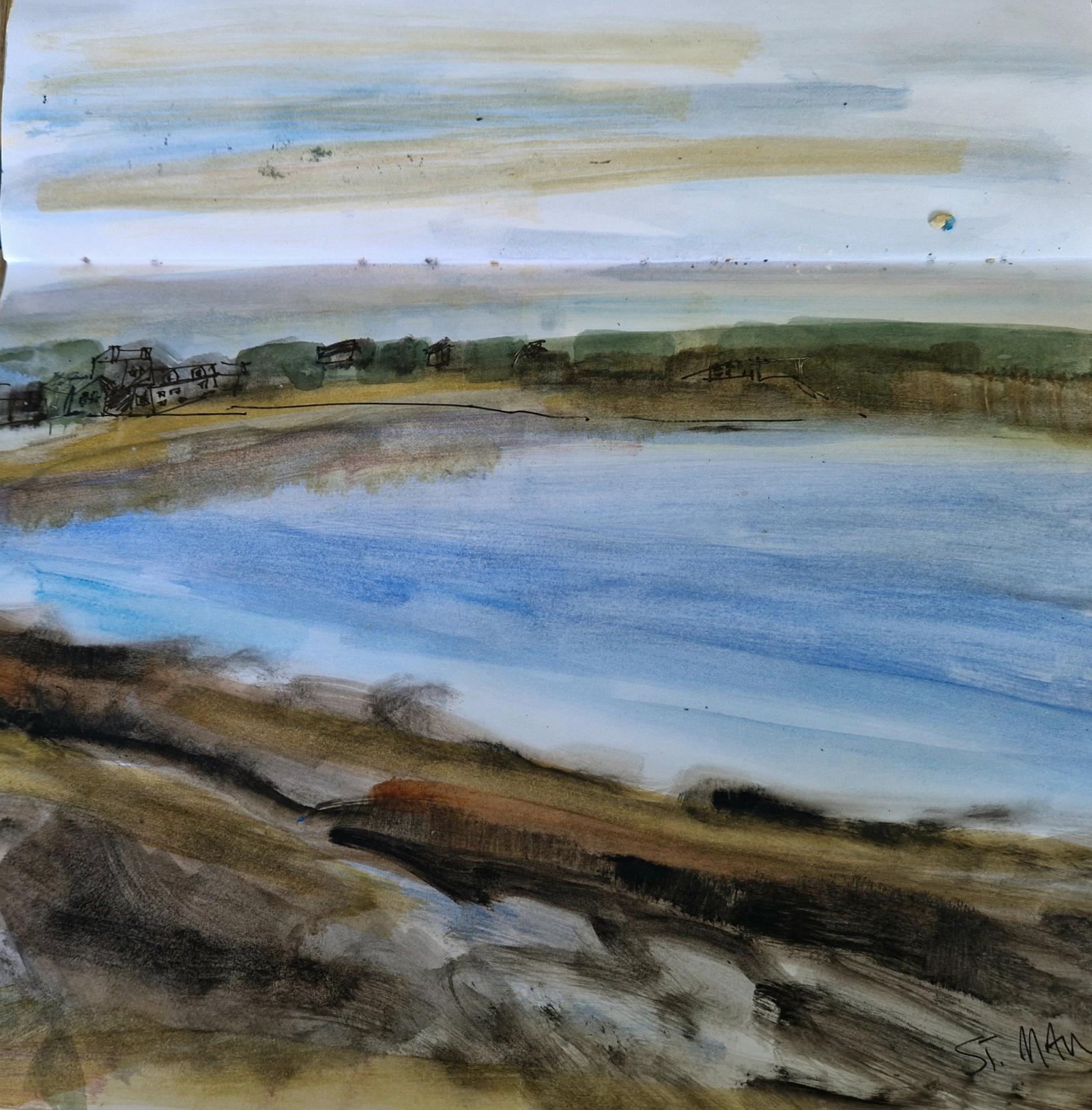
However sketching from life shouldn’t be forgotten I love to be outside with a sketch book and watercolours to create that moment and it gives me a sense of purpose for that landscape or the still life and especially life drawing. I strongly believe sketching from life with a 3D image in front of you will achieve often better results and the discipline is necessary for the brain to exercise and ultimately teach you to see and gain a greater understanding of perspective. Technology definitely has its place and I do use it in my studio to complete my landscapes. I believe you get a better result from the classical way of looking at your subject …I should imagine this statement is not for all and it shouldn’t be, art shouldn’t be segmented by rules and it must be what works for that artist at that time.
I guess, I label my paintings as ‘contemporary’, per se, not because they carry a big statement of political awareness or encompass new technology but because they are conceptual to the present moment.
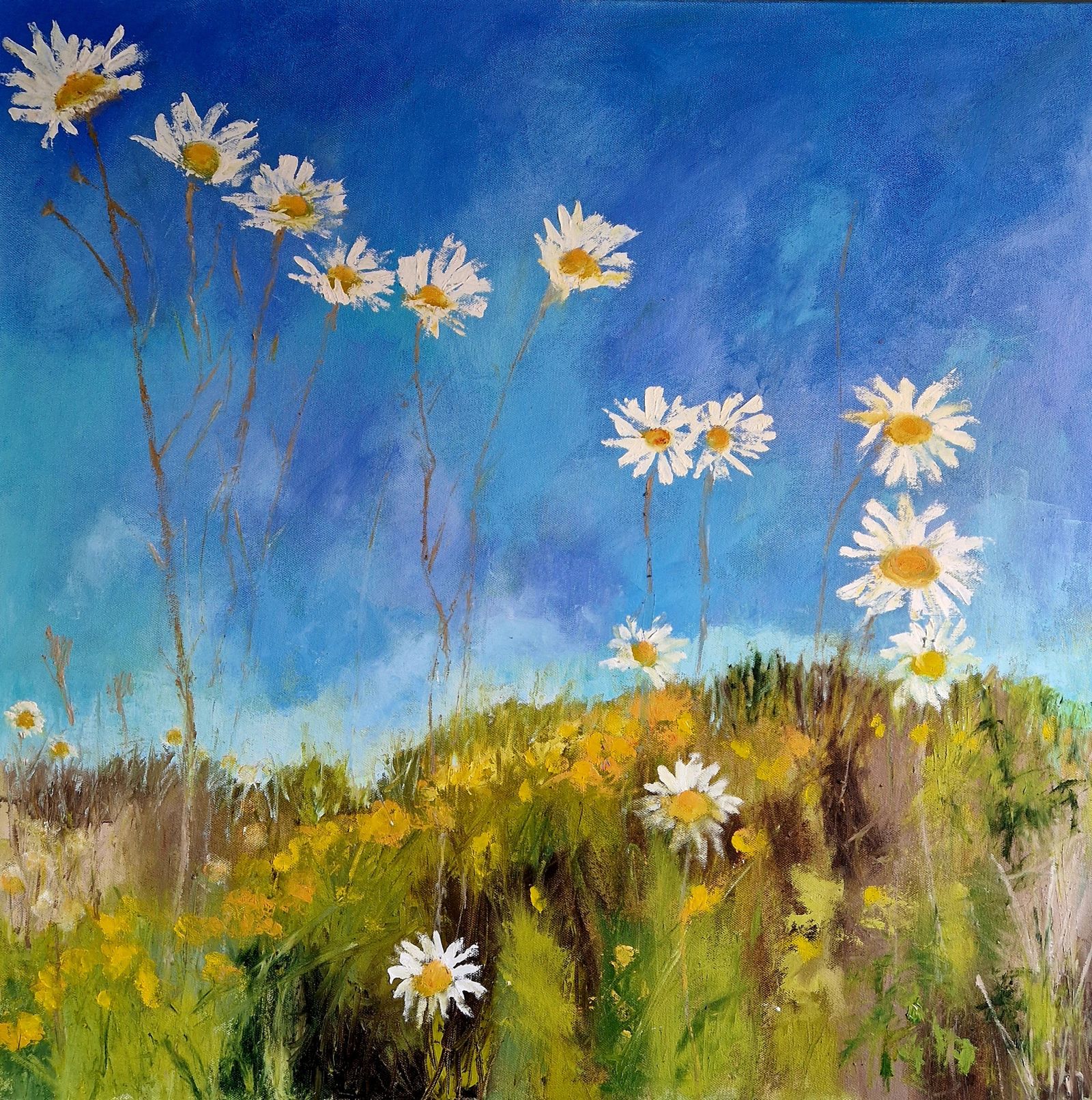
The beginnings of my works are deemed as classical, I start with a coloured ground on my prepared canvas and the colours I use are from an artist’s traditional palate, using traditional oil paint. However, I do use various techniques and mediums in creating my subject, not just the brush but also anything that may produce the mark I need to establish the appropriate look. I use both sketchbook and the camera on my phone (technology I guess) to gather my thoughts, so incorporate both past and present into my paintings.
I am quite an emotional painter as very many artists are and influenced by present life and what it throws at your door, which will undoubtedly controls the outcome of the canvas and how it is generated. The more you let the outside world in and its politics and environmental changes and what we deem as technical advancements and including past experience, you cannot help be influenced by it in your own art. One may start with just a mark on the surface or an outlined concept, but it is then how one may conduct the medium further. It may be confined to what is actually there or it may develop into abstract or riots of colour or no colour, and not necessarily the image that sparked the beginnings of the canvas, but it the results that are important to the artist. However, what will make it ‘contemporary’ the title of the work, the image, the meaning behind it or the critic in front of it?
I have always believed that a body of work that has been given a purposeful descriptive, would have an art movement behind its label, as in ‘Modern’ or ‘Post Modern’. However, Contemporary, is such a diverse adjective, it is better to use Contemporary as a suggestive umbrella descriptive and as the dictionary says …Contemporary meaning ‘existing in the present’.